

Table of Contents
- Where to Shop for Affordable Baby Clothes
- Secondhand Baby Clothes: The Smartest Budget Move
- How to Spot a Real Baby Clothes Sale
- Newborn Clothes Essentials: What You Actually Need
- Baby Clothes Sizing: Buy the Right Size the First Time
- Quality Checks for Affordable Baby Clothes
- Conclusion
- Frequently Asked Questions
Last Updated: October 9, 2026
Where to Shop for Affordable Baby Clothes
Finding affordable baby clothes starts with knowing which shopping channels cut costs without cutting quality. Parents save the most by mixing discount retailers, online deals, and secondhand sources instead of relying on one store.
Babies grow fast. A newborn can move through three sizes in a single season, so the cost adds up quickly if you buy everything new at full price. A common mistake is stocking up on one size before the baby arrives. Buy small batches instead and size up as you go.
Here's where budget-conscious parents typically shop:
- Big-box and discount stores for cheap basics
- Online retailers for bundle packs and clearance
- Secondhand shops and swaps for gently used items
- Warehouse clubs for bulk sleepwear and bodysuits
Each option has trade-offs. Discount stores keep prices low but carry fewer styles. Online shopping offers more choice but adds shipping, so watch for free shipping thresholds before you check out.
Government of Canada consumer product safety guidance on children's clothing
Secondhand Baby Clothes: The Smartest Budget Move
Secondhand baby clothes are the single biggest money-saver for most families, because babies wear each item only a handful of times before outgrowing it. Gently used onesies, sleepers, and pajamas often look new and cost a fraction of retail.
Where to look:
- Community clothing swaps and parent groups
- Consignment shops that screen for quality
- Hand-me-downs from friends and family
- Online resale listings for bundle deals
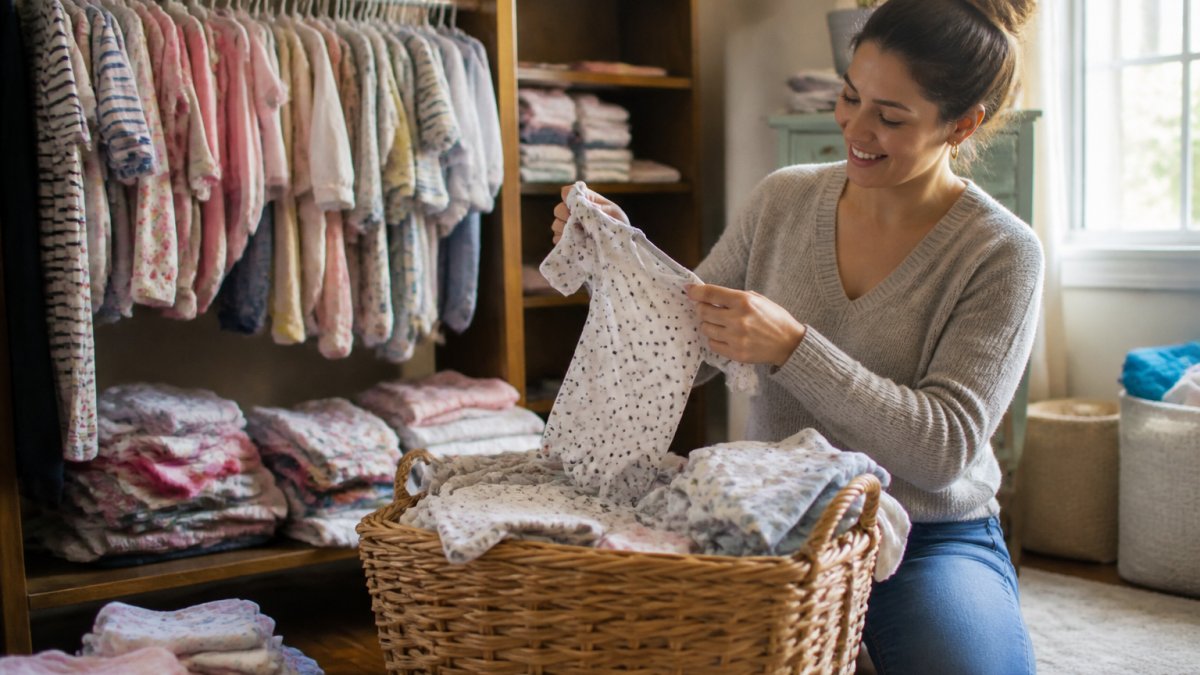
A common mistake is skipping the inspection step. Check every seam and snap before you buy. Stains and pilling are fine to pass on; loose stitching and broken zippers are not worth the savings.
How to Spot a Real Baby Clothes Sale
A real baby clothes sale drops the price on items you actually need. A fake one marks up the original price, then "discounts" it back to normal. The difference is measurable, and once you know the mechanics you stop overpaying.
Time your buys to the retail calendar
Baby apparel follows a predictable markdown rhythm. Buying against that rhythm beats chasing random promotions:
- End of season (roughly January and July): sleepwear, outerwear, and long-sleeve basics get cleared to make room for the next season. This is the best window to buy a size ahead.
- Post-holiday (early January): gift sets, holiday-themed sleepers, and bundled layette packs drop sharply once the season passes.
- Back-to-school (late summer): toddler and older-baby sizes see deeper cuts than newborn sizes, which move less.
- Long weekends and statutory holiday weekends: many retailers run storewide promotions, but the discount is usually shallow unless it stacks with clearance.
A common pattern is that the deepest discounts land on the sizes and styles nobody else wants. If you need a specific size in a specific season, buy earlier at a smaller discount rather than gambling on clearance.
Do the cost-per-wear math before you commit
Sticker price tells you almost nothing about value. Cost per wear does. Divide the price by the realistic number of wears before the baby outgrows the item.
- A $12 sleeper worn 40 times before it's too small costs about 30 cents per wear.
- The same sleeper bought on sale for $6 costs about 15 cents per wear.
- A $4 novelty outfit worn twice costs $2 per wear, worse than the full-price sleeper.
Newborn sizes are the trap. Most babies wear newborn sizing for only a few weeks, so even a cheap newborn item can carry a high cost per wear. Sizes 6-12 months and up last longer, which makes stocking up there safer.

Read the deal signals, not the discount percentage
- Bundle pricing: compare the per-item cost, not the bundle total. A 5-pack at $25 is $5 per item; a 3-pack at $18 is $6 per item.
- Loyalty and email sign-up discounts: useful on a first order, but check whether the code excludes clearance, many do.
- Free shipping thresholds: a $10 shipping fee can erase a 15% discount on a small order. Either meet the threshold with items you already need or skip the order.
- Return windows: a deal on a final-sale item is only a deal if the size works. Confirm the return policy before checkout.
| Deal Type | Best For | Watch Out For |
|---|---|---|
| End-of-season clearance | Stocking up a size ahead | Limited sizes left |
| Bundle packs | Everyday essentials | Higher upfront cost |
| Email sign-up discount | First orders | Expiring codes, clearance exclusions |
| Free shipping threshold | Small orders | Filling carts to qualify |
| Final-sale markdowns | Known sizes and brands | No returns if the fit is wrong |
Newborn Clothes Essentials: What You Actually Need
Newborn clothes essentials come down to a short, season-aware list, not a full closet. Most parents overbuy in the first month, then watch half the wardrobe go unworn. A small, planned wardrobe costs less and gets used more.

Build around a realistic first-90-days count
A practical newborn rotation looks roughly like this:
- 8 to 10 bodysuits (short-sleeve for warm months, long-sleeve for cool ones)
- 6 sleepers or footed pajamas
- 2 to 3 going-out outfits
- 4 to 6 pairs of socks or booties
- 2 hats (one light, one warmer)
- 1 to 2 light layers (cardigan or sleep sack, depending on season)
Anything beyond that usually goes unworn before the baby sizes up. If you're doing laundry every two to three days, this count is enough.
Newborn Baby Girls 14 Pc Layette Baby Shower Gift →
Adjust the list to the season and climate
A summer baby and a winter baby need different wardrobes, even at the same age:
- Warm months: lean on short-sleeve bodysuits, light cotton sleepers, and a single light layer. Skip heavy fleece.
- Cool months: add long-sleeve bodysuits, footed sleepers, and a sleep sack. Layering beats one thick piece because you can adjust as indoor temperatures shift.
- Shoulder seasons: mix both, and keep one warmer layer on hand for cold snaps.
A common mistake is buying a full wardrobe for the season the baby is born in, then discovering the baby has grown into the next size by the time the weather changes. Buy for the next 6 to 8 weeks, not the next 6 months.
Set a budget before you shop
A simple framework keeps spending in check:
- Set a total budget for the first three months of clothing.
- Spend most of it on everyday essentials, bodysuits and sleepers, because those get the most wears.
- Spend the least on going-out outfits, which are worn rarely and outgrown fast.
- Fill gaps with secondhand or hand-me-downs before buying new.
If you're buying a pre-assembled layette set, compare its per-item cost against buying the same pieces individually. Bundles usually win on price, but only if every piece fits your season and size plan.
Baby Clothes Sizing: Buy the Right Size the First Time
Baby clothes sizing trips up even experienced parents, because brands label sizes differently. A "newborn" fit in one brand can match a "0-3 month" in another.
Simple rules that work:
- Buy one size ahead, not three
- Check the height and weight range, not just the age
- Keep tags on until you confirm the fit
- Skip bulk buys in a single size
Newborn sizing fits most babies for only a few weeks. Toddler sizing lasts longer, so it's safer to stock up there. If you're unsure, buy fewer pieces and add more once you see how fast your baby grows.
Health Canada guidance on safe sleep and infant clothing
Quality Checks for Affordable Baby Clothes
Cheap baby clothes can still be well made. The trick is knowing what to check before you buy, so a low price doesn't turn into a short-lived item.
Look for:
- Soft cotton or cotton-blend fabric
- Reinforced seams and sturdy snaps
- Expandable necklines for easy changes
- Machine wash and tumble dry care
Fabric matters most. Cotton breathes and holds up to repeated washing better than thin synthetics. Check the care label too. If an item needs hand washing, it likely won't survive a busy household.
Conclusion
Building a baby wardrobe on a budget takes planning, not luck. Mix new basics with secondhand finds, buy one size ahead, and check quality before you commit. Lewlin & Company offers baby apparel, pet supplies, and household goods in one place, with competitive pricing on everyday essentials and bundle sets. Search our baby collection to stock up without overspending.
Frequently Asked Questions
Where can I find low-priced baby clothes?
Look beyond big-box stores. Online retailers that carry multi-pack basics, like a 6-pack of cotton bodysuits for $15.67, bring the per-piece cost down fast. Secondhand shops, community swaps, and end-of-season sales also cut prices significantly. The trick is buying everyday essentials in packs and saving single-piece purchases for items you truly need.
Are secondhand baby clothes a good way to save money?
Yes. Babies outgrow sizes in weeks, so many secondhand items have been worn only a handful of times. Check seams for fraying, snaps for function, and fabric for stains before buying. Wash everything in fragrance-free detergent before first use. Secondhand works best for sleepwear, bodysuits, and play clothes, while you may want to buy car seat covers and intimate items new.
How can I tell whether affordable baby clothes are good quality?
Check the fabric content first. Cotton and cotton blends hold up better through repeated washing than synthetic fabrics. Look at the stitching on seams and hems, tug gently to see if it holds. Check that snaps and zippers work smoothly. A 14-piece layette set made from soft cotton, for example, gives you a full rotation of essentials that survive frequent washing without falling apart.
How many baby outfits do I actually need?
Newborns go through 6 to 10 outfit changes daily, so plan for 8 to 10 bodysuits, 4 to 6 sleepers, and 2 to 3 going-out outfits in each size. Multi-pack sets cover this efficiently. A 14-piece layette set for $36.83 or an 18-piece set for $35.62 gives you a complete starter wardrobe without buying individual pieces.